From Mill to Neighborhood: Roots of the AVR Cleanup
July 24, 2026
Longtime owner Andrew Zamberlin traces the history of the Esmeralda land, including its environmental cleanup & community-driven redevelopment.
Hello everyone, my name is Andrew Zamberlin, and my family has owned the land for what has been commonly known as the Alexander Valley Resort (AVR) in the City of Cloverdale since January 2001. About two years ago we entered into contract with the Esmeralda Land Company for the sale of land and its entitlements.
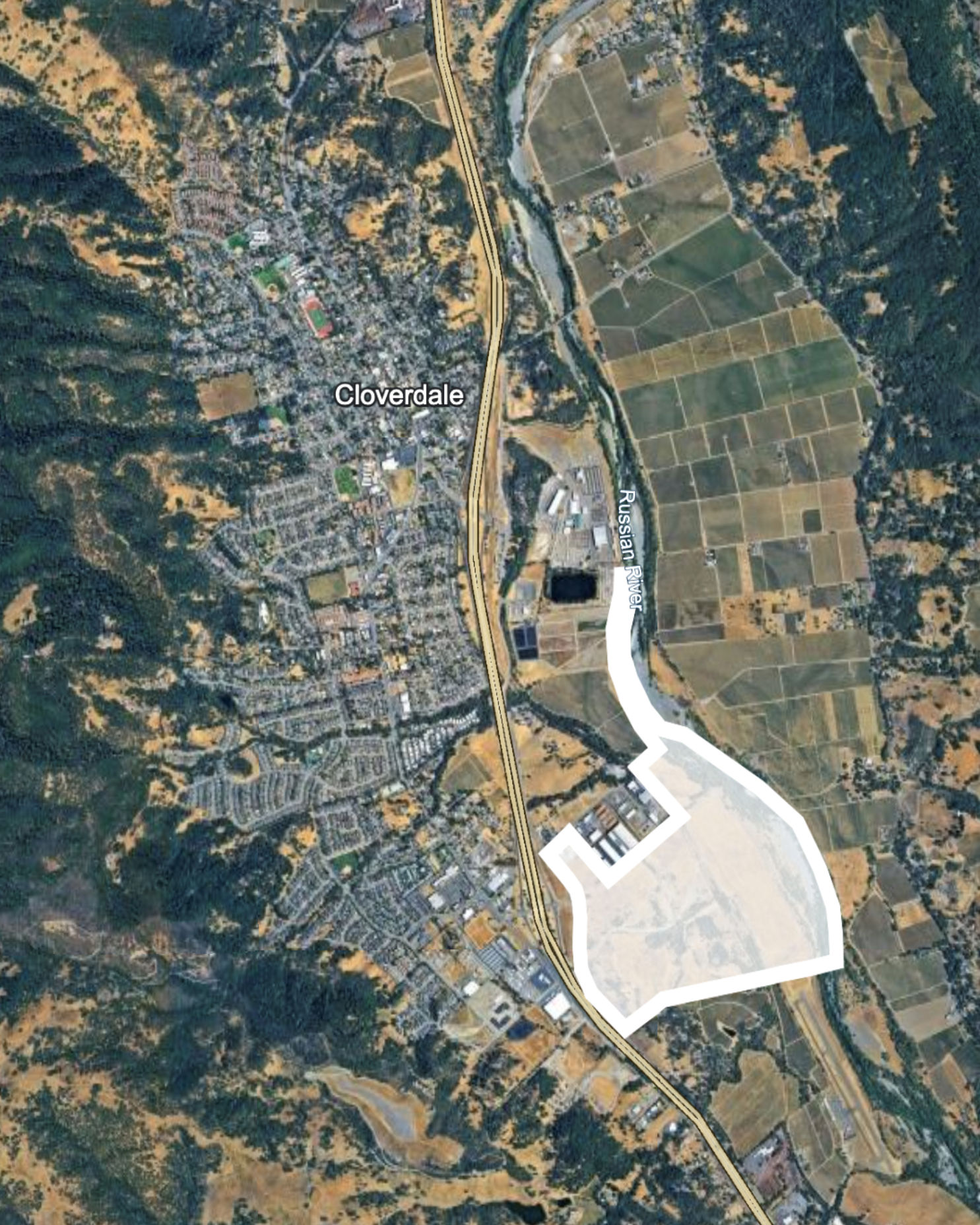
I thought it might be helpful to provide some historical context on the 261-acre property. Molalla Forest Products ran a mill on a portion of the AVR site dating back to the 1960s. That mill was eventually bought by Louisiana Pacific (“LP”) and was operated until 1994 when the mill closed, eliminating 300 local jobs.
Knowing that the mill was going to close, combined with the economic disruption caused by the rerouting of US 101 around downtown in February 1994, several members of the Cloverdale community put together a task force which worked with the City to come up with a re-use plan for the formerly industrial land. The goal was to create new jobs and drive sales tax, property tax, and hotel tax into the City's operating budget while not conflicting with the burgeoning industrial park next door. That task force, supported by the City's plan to change the land zoning to Destination Commercial to facilitate development, decided that the best use for the land was for a hotel surrounded by a golf course with housing and a commercial development.
In other words, the idea to redevelop the AVR site into a mixed-use resort and residential project was community-driven, not developer-driven.
The Process Of Getting AVR Approved
In 1994, Noack-Neighbor, LLC & Alexander Valley Resort, LLC (“Noack”) purchased the land from LP and began the process of developing the land as the community desired. The Dot Com bust of 2000 put an end to those plans. At the same time my father-in-law was looking for development opportunities and was introduced to the project. In January 2001 he closed escrow on the land, and picked up where Noack left off, working to complete the development/entitlement process.
However, before any development could take place, two wood waste landfills left by LP and soil and ground water contamination left by International Paper (“IP”) had to be cleaned up. More on that later.
Together with Sonoma County, the City, and the state North Coast Regional Water Quality Control Board (“Water Board”), my family worked from 2001 to 2026 to remediate the open environmental issues which the Water Board had been monitoring when LP sold the land.
In tandem with the environmental cleanup, my family worked with the City and other agencies and consultants to entitle the AVR property. Major steps included:
- Getting concurrence from the Water Board that the property had been adequately cleaned up from the legacy environmental issues, safely designed around any remaining contamination, and that proper safeguards were in place to deal with any future unknown issues
- Annexation of the property into the City
- An approved and adopted Specific Plan and Environmental Impact Report (“EIR”)
- An approved and adopted Development Agreement to vest the approvals
This process, extending from 2001 to 2018, included many stops and starts. Over the years we had dozens of public meetings in front of the numerous City Councils and the community discussing, amending, and adapting various elements of the project to the changing times. Every time an element of AVR was brought before the City Council it received a 5-0 vote, except once where it was 4-1. I think that speaks to the work and dedication that the community, the City, and my family have put into AVR and the fact that the idea was community-driven from the start.
We are a small family business and have never had the financial ability or qualifications to take the project of this size to the construction phase. This is something the City has always known and understood. Our plan was to clean up the site, entitle AVR, and find a developer who could take it into the construction phase.
The City and the community have always understood that no future developer would build exactly what was entitled. Each would bring their own ideas of what was financially feasible to the table, fully understanding however that each developer would have to work under the constraints and requirements of the existing EIR.
AVR's Environmental History
Beginning in 1983—43 years ago—the Water Board began monitoring, taking enforcement actions, and issuing cleanup orders against LP & IP. Since 1983 there have been 7 environmental related actions taken by the Water Board at the property.
The Water Board is an independent state agency. Its sole mandate is to protect and restore water quality for drinking, habitat, recreation, and agriculture. California's cleanup standards are among the strictest in the nation.
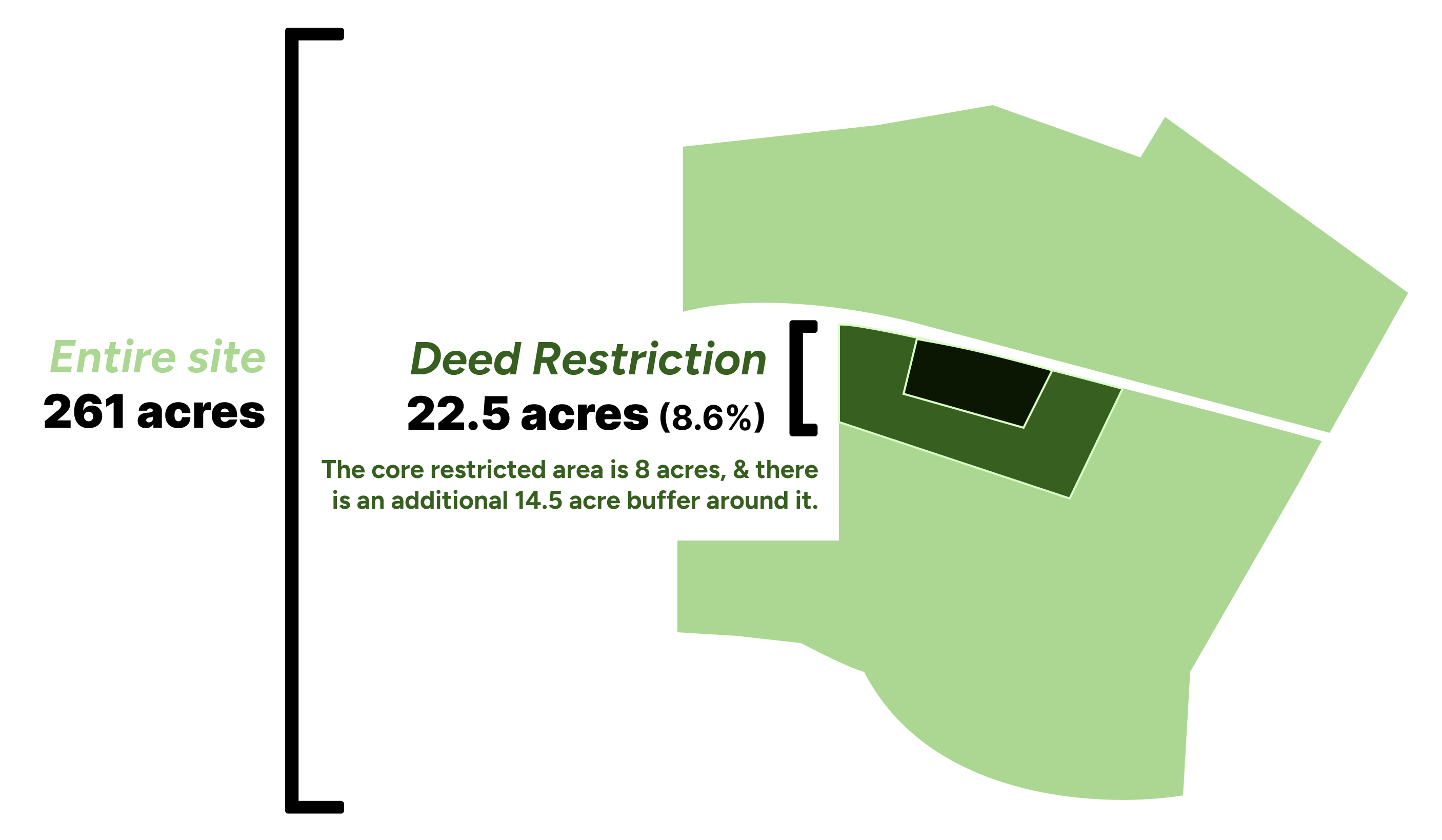
When the City approved AVR's Specific Plan and EIR in 2009, 5 of the 7 environmental cases were still open (with the other two having previously been closed) with no pending closure date. Even so, the City approved the project because AVR was designed around those issues while incorporating extensive mitigation measures outlined in the EIR and was subject to a 22-acre restrictive Environmental Covenant (“Covenant”) recorded against the property between my family and IP. Should an unknown environmental issue arise during construction, there are robust and detailed testing and cleanup requirements baked into the EIR, the City approvals, and the Covenant. Any future developer is required to incorporate these measures into any entitlement changes.
It should also be noted that although residential development is not allowed in the 22-acre restricted area, transitory commercial development is allowed because any contamination which might remain is at such a low level.
Since then, the Water Board has steadily closed each and every one of the 5 remaining cases. The Water Board has determined that “[t]he site has been fully assessed and remediated to the extent practicable and current site conditions pose little risk to human health or the environment.”
Factually, the approved AVR development could proceed today even if all 5 cases were still open. Why? Because these environmental issues were known at the time, planned for within the City approvals and the Covenant, with all being cleared by the Water Board.
The bottom line: this project was approved in 2009, amended and approved again in 2016, and amended and approved again in 2018 by three different City Councils. Each Council Member knew that the Water Board's requirements for safe and clean development were embedded within the City approvals and the Covenant.
Both the Water Board and three separate City Councils concluded that the AVR development was safe to move forward — even when the land had 5 open environmental cases, all of which have since been closed by the Water Board. In other words, the site is even safer and cleaner today than it was in its prior three approvals in 2009, 2016, and 2018.
AVR never worked out for my family the way we had hoped, but those are the chances you take in business. But what remains is the very real potential for a decade's long windfall for the community in the form of significant new City revenues and hundreds of new jobs.
And, after all, doesn't that take us back to the original goal of the community and where this all started in 1994: jobs and revenue?
— Andrew Zamberlin